Jamie Oliver's Classic Carbonara
Get ready to whip up Jamie Oliver's sensational Carbonara! This quick and creamy pasta dish is an absolute flavour bomb, perfect for any night of the week.
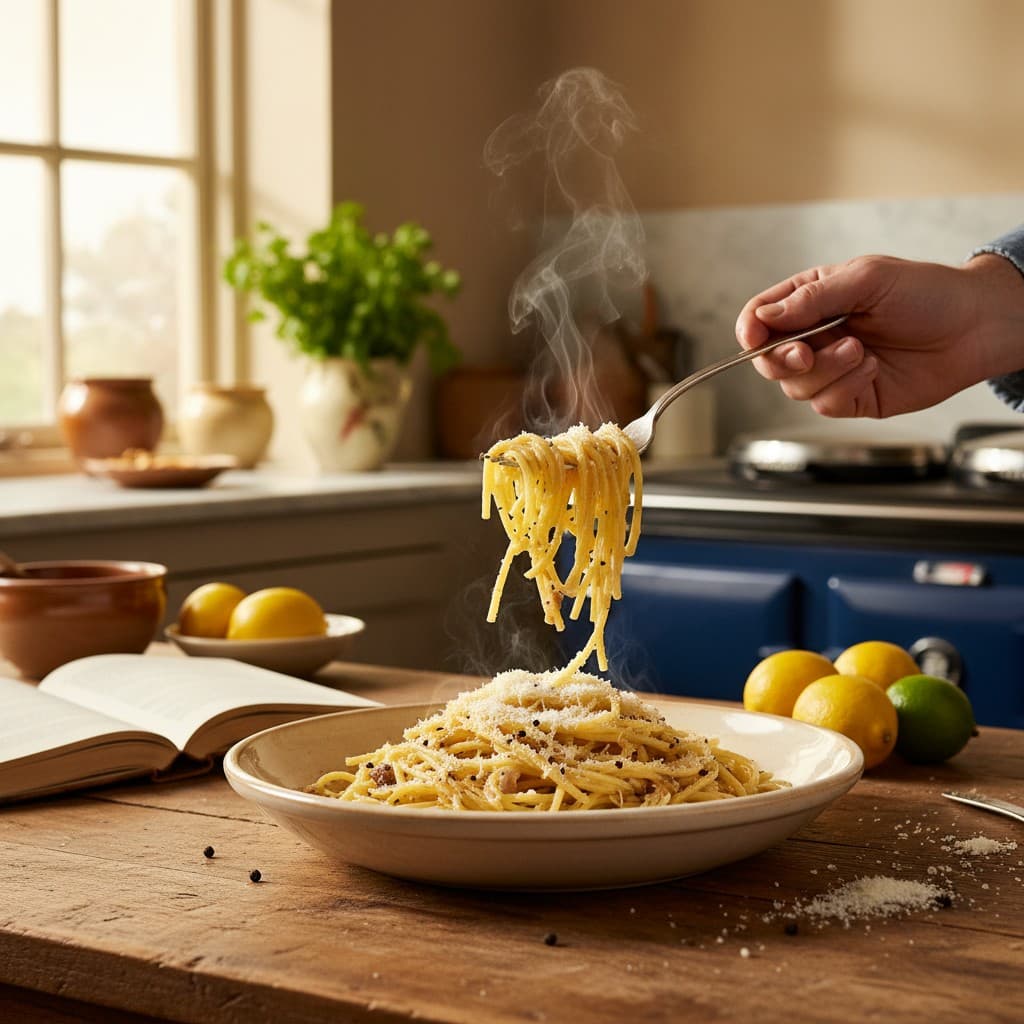
Oh, my goodness, you guys! If there's one dish that truly embodies the magic of simple, quality ingredients coming together to create an absolute flavour explosion, it has to be a brilliant Carbonara. And today, we're diving headfirst into the wonderful world of Jamie Oliver Carbonara – his approach, like all his cooking, is about celebrating incredible produce and making something utterly delicious and accessible. Forget everything you thought you knew about complicated pasta dishes; this is where the joy is! This isn't just a recipe; it's an invitation to experience the sheer comfort and vibrant zest of authentic Italian cooking right in your own kitchen. I mean, who doesn't adore a rich, creamy, peppery pasta dish that comes together quicker than you can say "mangia bene"?
Carbonara, at its heart, is a Roman masterpiece, a testament to the idea that fewer, better ingredients yield the most spectacular results. We're talking crispy, salty guanciale (that's cured pork jowl, my friends, and it's non-negotiable for that authentic punch!), velvety egg yolks, sharp, nutty Pecorino Romano cheese, and a generous crack of black pepper. The magic happens when these humble components dance together, creating a sauce so luxurious and coating, you'll wonder how it ever came to be without a single drop of cream! It's a dish that demands respect for its tradition but rewards you with an unparalleled depth of flavour. Jamie Oliver, with his knack for breaking down complex ideas into doable steps, shows us how to achieve that perfect, silky emulsion every single time, making it feel utterly effortless.
Now, why will you absolutely fall head over heels for this particular Carbonara? Well, for starters, it's incredibly quick – we're talking dinner on the table in under 30 minutes, which is a total win on those busy weeknights. But beyond the speed, it's the sheer vibrant flavour profile that truly shines. The salty, savoury crunch of the guanciale provides an incredible base, rendered down to release its golden fat, which then forms the foundation of our luscious sauce. Then, the creamy egg yolks and salty Pecorino Romano whisked together with that gorgeous rendered fat and a splash of starchy pasta water create an emulsion that clings to every strand of spaghetti like a dream. The generous amount of freshly cracked black pepper isn't just an afterthought; it's a vital player, adding a zesty warmth and a beautiful aromatic kick that cuts through the richness, leaving you craving more with every single bite. It's comforting, it's bold, it's incredibly satisfying, and it’s a brilliant way to bring a little bit of Rome’s culinary sunshine into your home. Get ready to twirl your fork into pure happiness!
Why You'll Love This Recipe
- Super quick to make, perfect for those busy weeknights when you still crave something incredibly satisfying and full of character.
- Boasts an unbelievably rich and creamy sauce, achieved without a drop of actual cream, showcasing the magic of egg yolks and cheese.
- Uses just a handful of high-quality ingredients that, when combined, create a flavour explosion that's truly greater than the sum of its parts.
Ingredients
- 200g guanciale (cured pork jowl), cut into 1/4-inch lardons
- 4 large free-range egg yolks
- 1 whole large free-range egg
- 100g Pecorino Romano cheese, finely grated, plus extra for serving
- Plenty of freshly cracked black pepper
- 350g spaghetti or bucatini
- Sea salt, for pasta water
- 1 tbsp olive oil (optional, if guanciale isn't very fatty)
Equipment Needed
Step-By-Step Instructions
- 1
Get Prepped and Pasta-Ready! First things first, let's get our ingredients ready to roll, because with a dish this quick, mise en place is your best friend! Grab that glorious guanciale and slice it into lovely, even lardons – about 1/4 inch thick and 1 inch long. You want them chunky enough to get beautifully crispy. Next, finely grate your Pecorino Romano cheese; we need a good, generous amount for that signature salty, tangy kick. Have it all measured out and ready to go. Now, fill a large pot with plenty of water for your pasta, add a generous pinch of sea salt – it should taste like the sea, remember? – and pop it on the hob over high heat to bring it to a rolling boil. Getting this water started early is key to a smooth cooking process, ensuring your pasta is ready just as your sauce comes together.
- 2
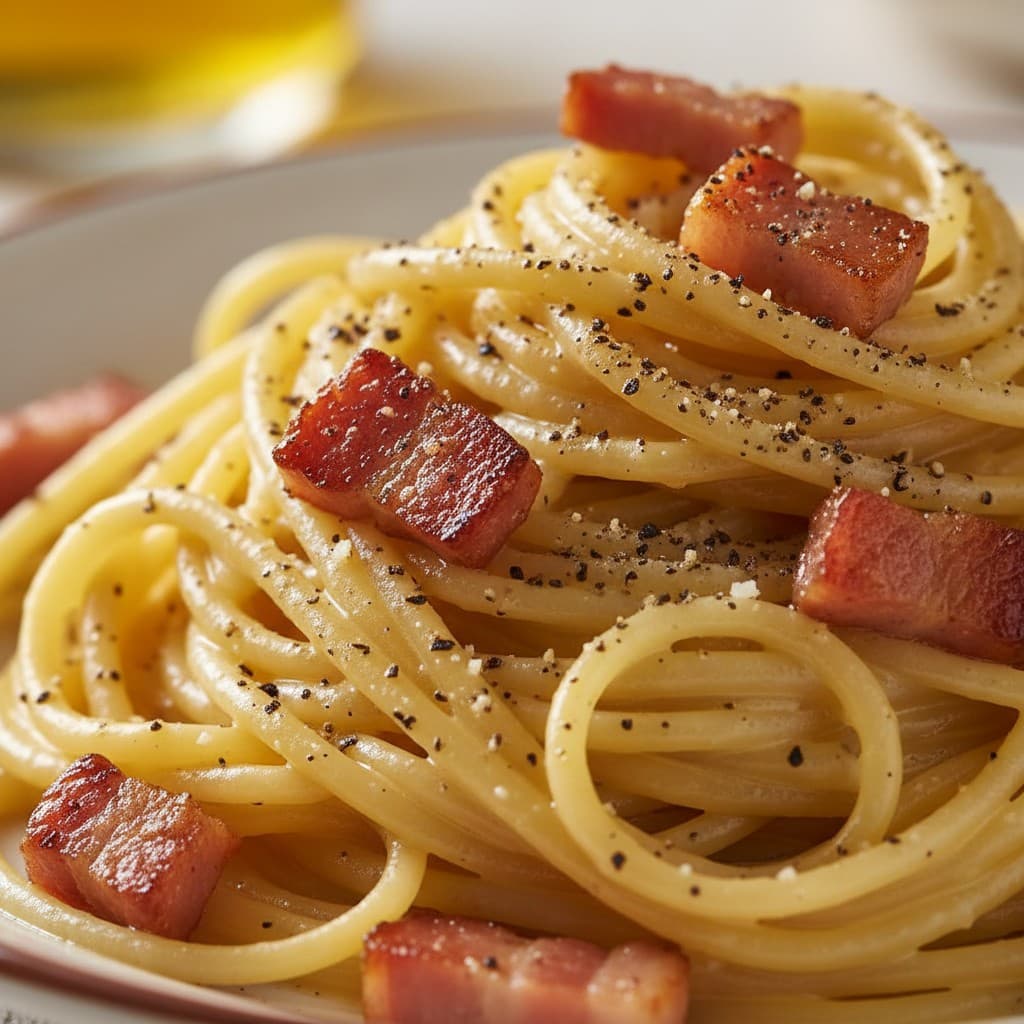
Crisp Up That Guanciale! While your pasta water is heating, place a large, dry frying pan (no oil needed initially, unless your guanciale is exceptionally lean, then a tiny splash of olive oil is okay!) over a medium-low heat. Add your guanciale lardons and let them slowly render out their incredible fat. This isn't a race, folks! Cook them gently, stirring occasionally, for about 8-10 minutes, until they are beautifully golden-brown and wonderfully crispy. The fat should be translucent and shimmering in the pan. Once they're perfect, remove the crispy guanciale pieces with a slotted spoon and set them aside on a plate, leaving all that glorious rendered fat in the pan. This fat is liquid gold for our sauce!
- 3
Whisk Up the Dreamy Sauce Base! Now for the heart of our Carbonara! In your large mixing bowl, crack in the four egg yolks and one whole egg. Add your finely grated Pecorino Romano cheese – all 100g of it! – and a generous amount of freshly cracked black pepper. Seriously, don't be shy with the pepper; it adds so much vibrant flavour and warmth! Give this mixture a really good whisk until it's beautifully smooth and well combined. You want it to be a pale yellow, slightly thick paste. This is your creamy, cheesy, peppery foundation that will transform with the hot pasta.
- 4
Cook Your Pasta to Perfection! By now, your salted pasta water should be at a rolling boil. Add your spaghetti or bucatini and cook according to package instructions until it's perfectly al dente. This means it should still have a slight bite to it – not mushy! Just before draining, make sure to reserve about 1 to 1 1/2 cups of that starchy pasta water. This cloudy, flavourful water is absolutely crucial for emulsifying our sauce and giving it that signature silky texture. Don't skip this step; it's a game-changer!
- 5
Bring It All Together (Off the Heat)! This is the magical moment! Drain your al dente pasta quickly, then immediately transfer it to the pan with the warm guanciale fat. Give it a good toss with tongs to coat every strand. Now, and this is super important: take the pan completely OFF the heat! Pour your egg and cheese mixture over the hot pasta. Start tossing vigorously with tongs, adding a splash of the reserved pasta water as you go. The residual heat from the pasta and the pan, combined with the starchy water, will gently cook the eggs into a luscious, glossy sauce without scrambling them. Keep tossing until the sauce is creamy and coats the pasta beautifully. Add a little more pasta water if it seems too thick, or a bit more cheese if it needs tightening up.
- 6
Serve Immediately and Enjoy! As soon as your Carbonara is perfectly creamy and coated, stir in most of your crispy guanciale pieces, saving a few for garnish. Plate it up straight away – Carbonara waits for no one! Serve generous portions, topped with a final sprinkle of extra Pecorino Romano, another generous crack of black pepper, and those reserved crispy guanciale bits. Get your forks ready to twirl into this absolute masterpiece. Seriously, this is comfort food at its finest, packed with such vibrant, zesty flavour!
Jamie's Kitchen Tips
Alright, my lovely home cooks, let's chat about making your Carbonara truly sing, Jamie Oliver style! First off, the ingredients are KEY. For that authentic, zesty flavour, guanciale is your absolute best friend. It’s cured pork jowl, and its unique fat renders down beautifully, giving the dish an incredible depth that pancetta (cured pork belly) just can't quite match. If you absolutely can't find guanciale, good quality pancetta is the next best thing, but try to find it! And please, please, please, use fresh, free-range eggs. Their yolks are richer, brighter, and make all the difference to the sauce's colour and creaminess. As for cheese, it has to be Pecorino Romano – it's a sheep's milk cheese with a sharp, salty, tangy punch that is essential for that signature Carbonara zing. Parmigiano Reggiano is lovely, but it's a different flavour profile. Now, for the magic trick: NO CREAM! A true Carbonara gets its incredible creaminess from the emulsification of egg yolks, cheese, rendered pork fat, and that starchy pasta water. The secret is temperature control. You MUST take the pan off the heat before adding the egg mixture. The residual heat from the pasta and the pan is just enough to gently cook the eggs into a silky sauce, not scramble them. If your pan is too hot, you'll end up with scrambled egg pasta, and we definitely don't want that! If your sauce seems too thick, add a splash more of that reserved pasta water – it's your secret weapon for lusciousness. If it's too thin, a little more grated Pecorino can help thicken it up. And remember, freshly cracked black pepper is not just a garnish; it's a core flavour component, so be generous! Don't pre-grind it; crack it fresh for maximum aromatic impact. This dish is all about bold, simple flavours working in harmony, so don't be afraid to taste and adjust as you go. Happy cooking!
Substitutions & Variations
- Guanciale: If unavailable, use good quality pancetta (cured pork belly). As a last resort, smoked streaky bacon can be used but will significantly change the traditional flavour.
- Pecorino Romano: Parmigiano Reggiano (Parmesan) can be used, but note that it's less salty and has a milder, nuttier flavour, so you might need to adjust seasoning.
Serving Suggestions
- A simple, crisp green salad with a bright, zesty lemon vinaigrette to cut through the richness.
- Crusty ciabatta bread or a rustic sourdough to mop up every last bit of that incredible, creamy sauce.
Storage & Reheating
Carbonara is truly best eaten immediately after it's made. The delicate egg-based sauce doesn't hold up well to refrigeration and reheating, as the eggs can scramble and the texture will become grainy. If you absolutely must store leftovers, place them in an airtight container in the fridge for up to 1 day. To reheat, very gently warm in a pan over extremely low heat, adding a splash of water or broth and stirring constantly. Be prepared for the texture to be different from freshly made.